Algo Trading vs. Manual Trading - Pros & Cons
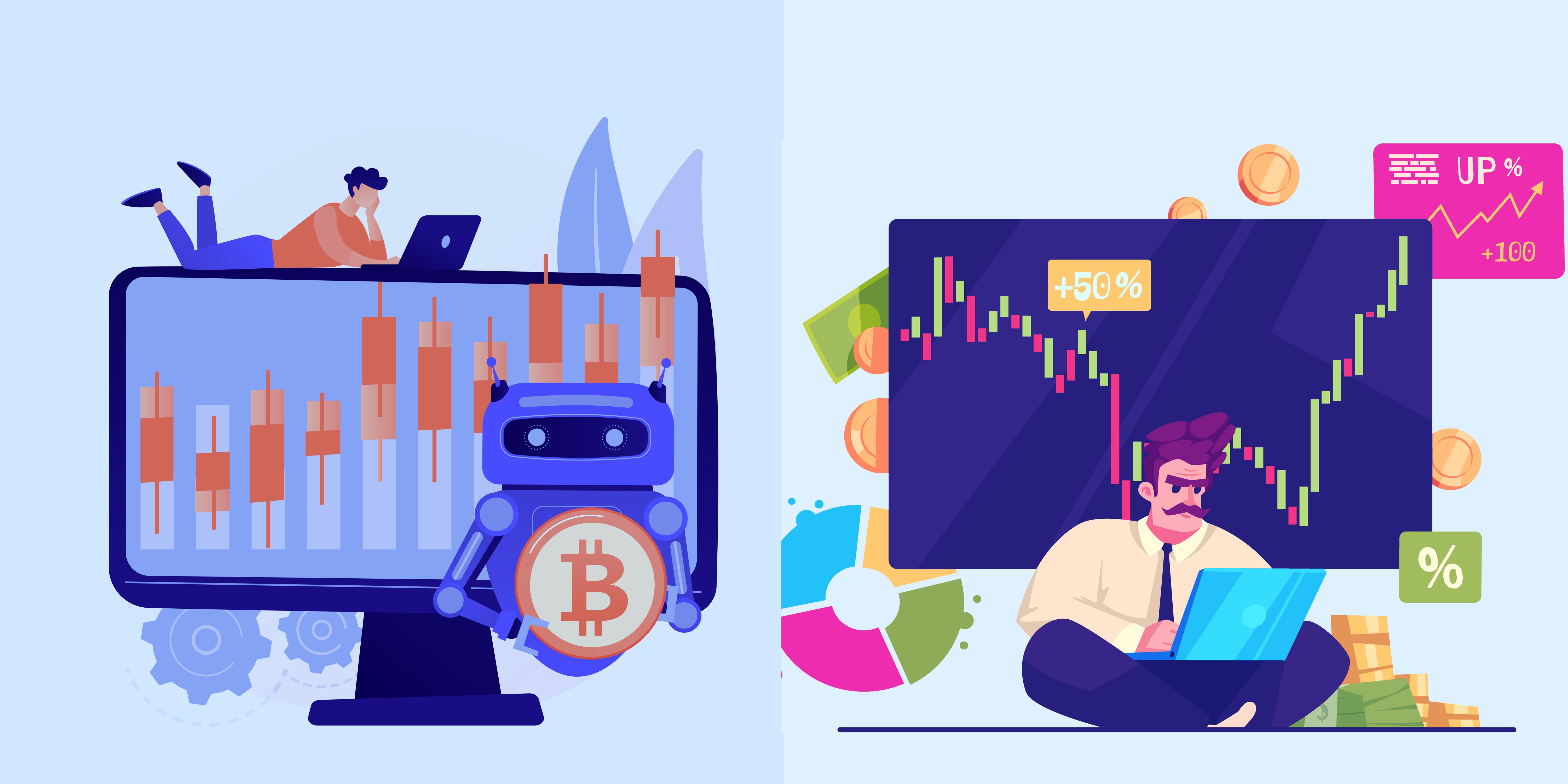
Trading in financial markets has evolved significantly with the advancement of technology. Today, traders can choose between algorithmic (algo) trading and manual trading, each having its own set of advantages and challenges. In this blog, we will explore the pros and cons of both approaches to help traders make an informed decision.

Algo Trading
Pros:
- Speed & Efficiency: Algo trading executes orders at lightning-fast speeds, minimizing delays and human errors.
- Emotion-Free Trading: Algorithms operate purely based on logic and data, eliminating emotional biases that often affect human traders.
- Backtesting & Optimization: Traders can test their strategies on historical data before deploying them in live markets, ensuring better performance.
- 24/7 Market Monitoring: Algorithms can track and trade across multiple markets simultaneously without fatigue.
- High Scalability: Algo trading allows for handling multiple trades at once, making it ideal for high-frequency trading (HFT).
Cons:
- Technical Complexity: Requires programming knowledge and an understanding of market dynamics to build and maintain trading algorithms.
- High Initial Cost: Developing and maintaining an algo trading system can be expensive due to infrastructure and software requirements.
- Market Risks & Overfitting: Strategies optimized for historical data may not always perform well in real-time market conditions.
- Regulatory Challenges: Some jurisdictions have strict rules on algorithmic trading, requiring compliance with additional regulations.
- Dependence on Technology: System failures, software bugs, or connectivity issues can lead to missed opportunities or significant losses.
Manual Trading
Pros:
- Flexibility & Adaptability: Traders can adapt to changing market conditions quickly based on real-time information and intuition.
- Lower Initial Cost: No need for expensive infrastructure, making it more accessible to retail traders.
- Understanding of Market Sentiment: Human traders can analyze news, earnings reports, and global events better than algorithms.
- Easier to Start: Requires less technical knowledge compared to algo trading, making it suitable for beginners.
- Personal Learning & Experience: Traders develop their skills over time, gaining insights that can improve their decision-making.
Cons:
- Emotional Bias: Fear, greed, and overconfidence can lead to impulsive decisions and poor risk management.
- Slower Execution: Human traders take longer to analyze data and execute trades compared to automated systems.
- Limited Market Monitoring: Manual traders can only focus on a limited number of assets at a time.
- Inconsistent Performance: Trading success depends on the trader's discipline, experience, and mental state, leading to fluctuations in performance.
- Time-Consuming: Requires constant monitoring of the market, making it less practical for those with other commitments.

Conclusion
Both algo trading and manual trading have their merits and drawbacks. Algo trading is best suited for those with technical expertise and access to resources, while manual trading remains a viable option for traders who prefer a hands-on approach and market intuition. Ultimately, the choice depends on individual trading goals, skills, and risk appetite. Some traders even opt for a hybrid approach, combining the strengths of both methods to maximize efficiency and profitability.
For traders looking to explore algorithmic trading with ease, platforms like ModernAlgos provide intuitive solutions to automate strategies and enhance trading efficiency.
About the Author

The content in these posts/articles is for informational and educational purposes only and should not be construed as professional financial advice and nor to be construed as an offer to buy /sell or the solicitation of an offer to buy/sell any security or financial products. Users must make their own investment/trading decisions based on their specific investment/ trading objective and financial position and using such independent advisors as they believe necessary.